Project Management Guide
How to Develop a Project Management Plan
To develop a project management plan, you need a clear structure for scope, schedule, budget, roles, risks, communication, quality, and control. A good plan turns a project idea into a practical framework for delivery.
In this guide, you will learn what a project management plan is, why it matters, which sections it usually includes, and how to build one step by step without starting from a blank page every time.
Quick answer
To develop a project management plan, start by defining the project objective, scope, timeline, resources, budget, risks, responsibilities, communication approach, and control process. Then organize those elements into one clear document that guides execution and monitoring.
In this guide
Why a project management plan matters
When a project starts without a proper management plan, teams often rely on assumptions. That creates confusion around scope, priorities, deadlines, ownership, reporting, and decision-making. A project management plan helps prevent that by giving everyone a shared reference point.
It is not just a formal document. It is the practical guide for how the project will be run. It gives the project manager and the team a structure for planning, coordination, monitoring, and control.
Clearer direction
Explains what the project is trying to achieve and how the work will be organized.
Better coordination
Defines responsibilities, communication, milestones, and reporting expectations.
Stronger control
Supports progress tracking, risk management, quality checks, and change control.
What a project management plan usually includes
The exact structure depends on the project, but most project management plans cover the same core areas.
Project objectives
The intended outcome, key deliverables, and success criteria.
Scope
What is included, what is excluded, and how the work is broken down.
Schedule
The main activities, dependencies, milestones, and timeline.
Budget and resources
The people, equipment, materials, and costs required for delivery.
Roles and responsibilities
Who does what, who approves what, and how accountability is assigned.
Communication
How updates, reports, decisions, and stakeholder communication will be handled.
Risk and issue management
How risks and issues will be identified, assessed, tracked, and addressed.
Quality and control
How performance, deliverables, and changes will be reviewed and managed.
Need a ready-made starting point?
If you want an editable structure for planning, reporting, scope, risks, schedule, procurement, and more, see the Project Management Template Set .
How to develop a project management plan step by step
-
Discuss the project with key stakeholders
Start by understanding expectations, constraints, priorities, and required outcomes. You need alignment before you can build a workable plan.
-
Define the project scope
Clarify the deliverables, boundaries, assumptions, and exclusions. A vague scope leads to weak planning and uncontrolled changes.
-
Build the schedule
Break the work into activities, sequence them logically, and identify key milestones and dependencies.
-
Plan resources and responsibilities
Determine which people, equipment, services, and materials are needed, and define who is responsible for what.
-
Prepare the budget
Estimate costs based on scope, schedule, and resources, and allow for realistic contingencies.
-
Define communication and reporting
Decide how progress will be reported, who needs which information, and how decisions and updates will be documented.
-
Plan quality, risk, and control
Set out how quality will be checked, which risks need attention, and how changes and issues will be monitored and controlled.
-
Review and approve the plan
Before execution starts, confirm that the relevant stakeholders understand and approve the plan.
Simple example structure
Imagine a company needs to launch a new internal reporting process across several departments. The project management plan would define the target outcome, list the work packages, identify owners, set milestone dates, explain reporting frequency, and describe how risks and changes will be handled.
Example project management plan structure
- Objective: Implement a standardized reporting process across all departments.
- Scope: Process design, approvals, training, implementation, and review.
- Schedule: Kickoff, design approval, pilot rollout, team training, full implementation.
- Resources: Project manager, process owners, department representatives, support team.
- Risks: Delayed approvals, resistance to change, incomplete data, training gaps.
- Reporting: Weekly updates, milestone reviews, issue log, risk review.
Common mistakes to avoid
Starting with a blank page too late
A rushed plan often becomes incomplete, inconsistent, or too generic to be useful.
Writing the plan too vaguely
If the plan is unclear, the team will still need to guess how the project should run.
Ignoring stakeholder input
Missing early alignment often leads to rework, delays, and approval problems later.
Not keeping the plan current
A project management plan should guide the project, not become an outdated file nobody uses.
Do templates help when developing a project management plan?
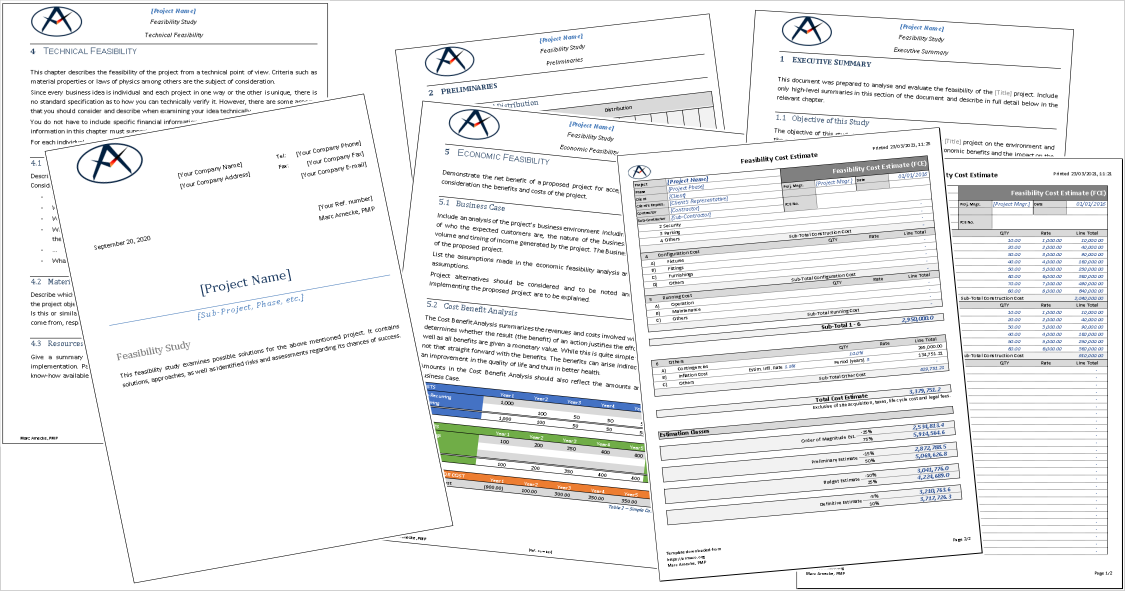
Yes. Templates help because they reduce setup time and give you a practical structure from the start. Instead of deciding every heading, section, and formatting detail from scratch, you can begin with coordinated documents and adapt them to the project.
Starting from scratch
- Takes more time
- Higher risk of missing sections
- More formatting effort
- Harder to standardize across projects
Using templates
- Faster first draft
- Clearer structure
- Easier collaboration
- More consistent final documentation
Templates do not replace project thinking, but they do save time and help you avoid reinventing the wheel. You can explore the full Project Management Templates – PRO Version 2023 here.
Frequently asked questions
What is the purpose of a project management plan?
Its purpose is to explain how the project will be organized, delivered, monitored, and controlled.
Who develops the project management plan?
Usually the project manager, with input from stakeholders, specialists, and key team members.
When should the project management plan be prepared?
It should be developed during project planning, before full execution begins.
How detailed should a project management plan be?
Detailed enough to guide the project clearly, but still practical and usable for the team.
Can templates make project planning easier?
Yes. They help save time, improve structure, and reduce the risk of forgetting key sections.
Want a faster way to develop your project management plan?
See the full template pack with 40+ editable Word and Excel files for planning, reporting, risks, scope, schedule, procurement, and more.