Construction Startup Guide
How to Develop a Project Mobilization Plan
A project mobilization plan helps you prepare people, equipment, logistics, permits, communication, and site setup before execution begins. It turns a rushed project start into a more structured and controlled handover into delivery.
In this guide, you will learn what a project mobilization plan is, what it should include, how to prepare one step by step, and how templates can help you start projects faster and with fewer omissions.
Quick answer
A project mobilization plan is a structured document used to prepare a project for execution. It usually covers startup activities such as site setup, staffing, equipment, permits, logistics, communication, safety, reporting, and readiness planning.
In this guide
What is a project mobilization plan?
A project mobilization plan is the document that organizes the transition from project award or approval into actual execution. It helps the team prepare the site, deploy resources, establish responsibilities, arrange logistics, and confirm that the project is ready to start.
In construction and other execution-heavy projects, the mobilization period is often short, busy, and full of dependencies. That is why mobilization planning is so important. It gives the team a practical startup structure instead of relying on scattered emails, assumptions, and last-minute coordination.
Why a mobilization plan matters
Projects often lose time right at the beginning because startup activities are not aligned clearly. Equipment may not arrive on time, permits may still be pending, temporary facilities may be missing, responsibilities may be unclear, and reporting may not be set up properly.
Creates startup clarity
Defines who does what, what is needed, and what must happen before execution can begin.
Reduces delays
Helps avoid missed startup activities, incomplete preparation, and poor early coordination.
Improves readiness
Supports a smoother transition into site work, delivery, reporting, and project control.
What a project mobilization plan should include
The exact content depends on the project, but a strong mobilization plan usually covers the following areas.
Project startup scope
What needs to be in place before execution starts and what readiness means for this project.
Roles and responsibilities
Who owns startup actions, approvals, coordination, reporting, and decision-making.
Staffing and workforce mobilization
Which people are needed, when they are needed, and how they will be deployed.
Equipment and materials
Key equipment, tools, temporary facilities, and material deliveries required for startup.
Site setup and logistics
Access, storage, transportation, utilities, offices, laydown areas, and temporary arrangements.
Permits, approvals, and compliance
Licenses, statutory requirements, environmental controls, and startup approvals.
Safety, insurance, and readiness controls
Safety preparation, insurance or bond requirements, and checks before work begins.
Communication and reporting
Kickoff meetings, stakeholder coordination, reporting lines, and progress tracking during startup.
Need a ready-made mobilization structure?
If you want an editable starting point for startup planning, responsibilities, logistics, and mobilization readiness, see the Project Mobilization Plan Template.
How to develop a project mobilization plan
-
Define startup objectives and readiness criteria
Clarify what must be ready before execution starts, including people, access, facilities, equipment, permits, and reporting arrangements.
-
Identify key stakeholders and startup responsibilities
Confirm who is responsible for site preparation, logistics, compliance, staffing, procurement, approvals, and project controls.
-
Prepare the mobilization schedule
Break startup work into activities and dates so the team can see the sequence, dependencies, and critical early actions.
-
Plan staffing, equipment, and temporary facilities
Define which people, tools, machinery, offices, utilities, and temporary works are needed to support startup and early execution.
-
Review permits, compliance, insurance, and safety requirements
Check which approvals, insurances, bonds, environmental measures, safety documents, and statutory conditions must be in place before work begins.
-
Organize site logistics and delivery arrangements
Plan access routes, storage, laydown areas, transportation, waste handling, temporary services, and supply coordination.
-
Set communication and reporting rules
Establish kickoff meetings, progress reporting, issue escalation, and coordination channels for the mobilization period.
-
Review, update, and approve the plan
Validate that the plan is complete, realistic, and aligned with the project schedule before full execution starts.
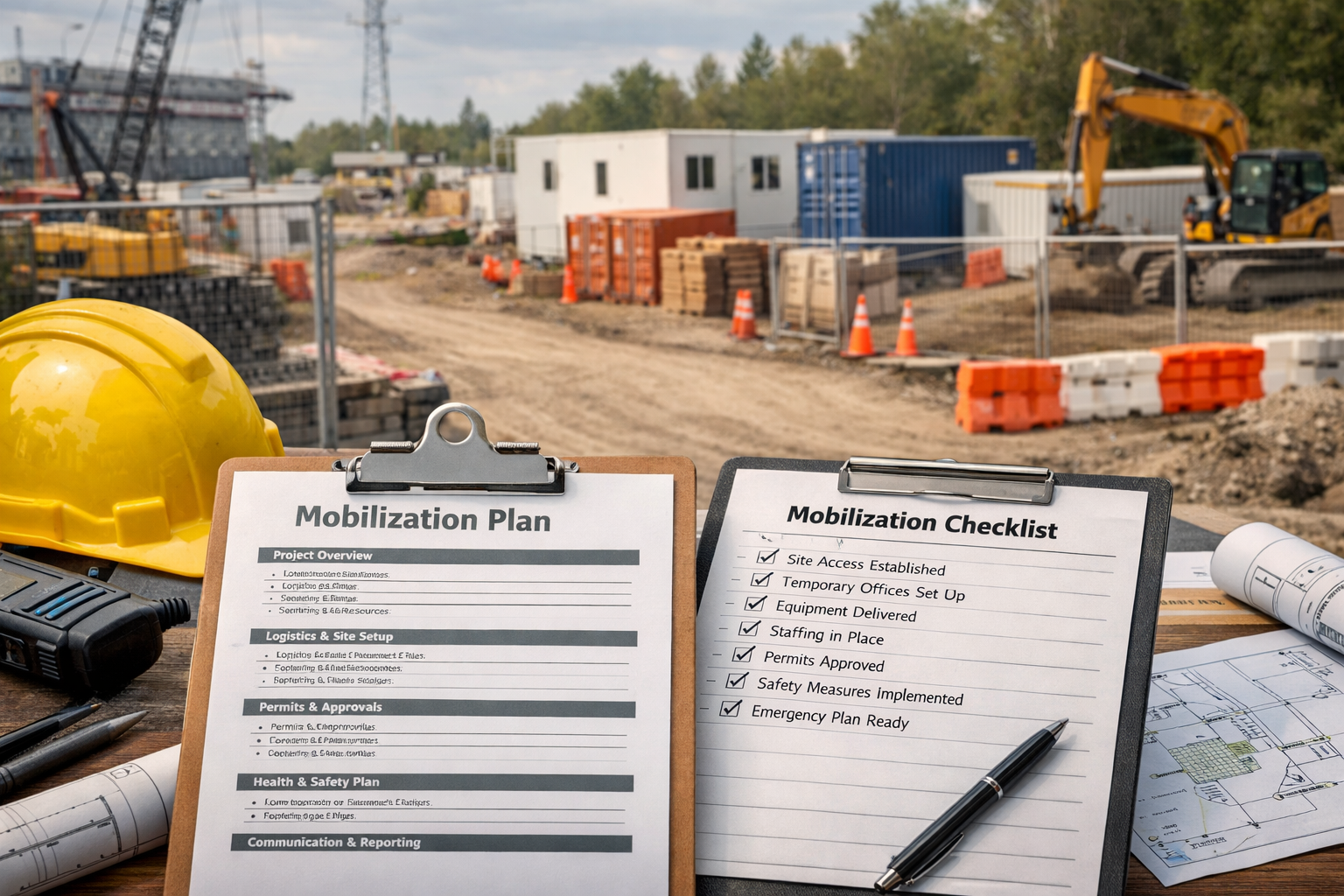
Simple mobilization checklist
Typical startup checklist items
- Kickoff meeting completed
- Roles and responsibilities confirmed
- Mobilization schedule prepared
- Key staff assigned and available
- Equipment and materials arranged
- Temporary facilities and utilities ready
- Permits and approvals reviewed
- Safety and environmental requirements addressed
- Insurance, bonds, or financial requirements checked
- Reporting, communication, and document control set up
A checklist like this helps reduce the risk of missing practical startup activities that later cause delay, confusion, or rework.
Common mistakes to avoid
Starting too informally
When mobilization is handled only through ad hoc emails and calls, important actions are often missed.
Ignoring permits and compliance
Missing approvals, environmental requirements, or safety prerequisites can delay startup quickly.
Weak logistics planning
Poor site access, storage, utilities, or transportation planning can disrupt the project from day one.
No clear ownership
If responsibilities are unclear, the team may assume someone else is handling a critical startup task.
How templates help with mobilization planning
Templates help because they give you a practical structure before startup pressure begins. Instead of creating every section from scratch, you can begin with a format that already supports key mobilization topics such as responsibilities, logistics, readiness actions, and reporting.
Starting from scratch
- More setup time
- Higher risk of missing startup items
- Less consistency across projects
- More rework before use
Using templates
- Faster first draft
- Clearer startup structure
- Easier review and coordination
- More consistent mobilization planning
If you want that kind of head start, explore the Project Mobilization Plan Template.
Frequently asked questions
What is the purpose of a project mobilization plan?
Its purpose is to organize the startup phase so people, equipment, permits, logistics, and controls are ready before execution begins.
Is a mobilization plan only for construction projects?
No. It is especially common in construction, but any project with a structured startup phase can benefit from one.
What is usually included in a mobilization checklist?
Typical items include staffing, equipment, facilities, permits, safety, logistics, insurances, reporting, and kickoff readiness actions.
Who usually prepares the mobilization plan?
Usually the project manager or startup lead, with input from operations, commercial, HSE, logistics, and site teams.
Can a template make mobilization planning easier?
Yes. A template gives you a practical structure so you can plan faster and reduce the chance of missing important startup tasks.
Want a faster way to prepare your mobilization plan?
See the editable template built to help you organize startup activities, responsibilities, readiness actions, and project mobilization more clearly.